
Call Us: +27 11 043 0153
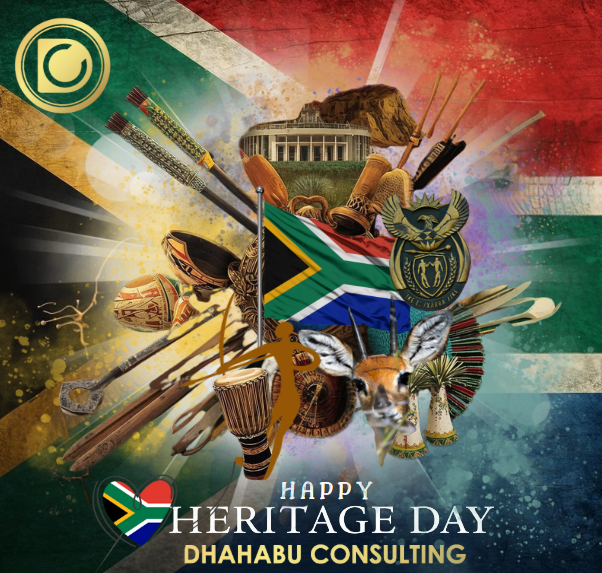
As we commemorate Heritage Day, it is important to reflect on the industries that have not only shaped South Africa’s past but also continue to define its present and future. Mining is one such industry, deeply woven into the fabric of our national heritage.
Early Mining Traditions: A Pre-Colonial Legacy
The story of South African mining extends far beyond the colonial era. Archaeological evidence from sites such as Mapungubwe, a UNESCO World Heritage Site in Limpopo, reveals sophisticated mining and metalworking practices dating back to the 9th century. Early African societies mined and smelted gold, iron, and copper, which were used for trade and adornment. These activities were not isolated; they linked Southern Africa to international trade networks that stretched across the Indian Ocean to the Middle East and Asia, demonstrating a long history of economic and cultural exchange (Hall, 1987). This early period of mining established a foundation of skill and innovation that would later be eclipsed but not erased by the seismic shifts of the modern era.
The Mineral Revolution: A Catalyst for Modern South Africa
The trajectory of South Africa was forever altered by two pivotal discoveries. In 1867, a diamond was found near Kimberley, igniting the diamond rush. Less than two decades later, in 1886, a massive gold reef was discovered on the Witwatersrand, triggering the world’s largest gold rush. This period, known as the Mineral Revolution, transformed South Africa from a largely agrarian society into a global economic powerhouse (Feinstein, 2005).
· Urbanization and Infrastructure: The rush for gold led directly to the founding of Johannesburg, a city that grew from a small mining camp into a bustling metropolis in just a few years. To support the burgeoning industry, a network of railways was built to transport ore and supplies, new banks were established to finance mining operations, and a modern power grid was developed to fuel the machinery. This infrastructure laid the groundwork for the modern South African state.
· Demographic and Social Change: The demand for labour was immense. The gold and diamond mines attracted a diverse workforce, drawing prospectors from Europe and, crucially, thousands of migrant labourers from across Southern Africa. This mass migration reshaped the country’s demographics, creating complex new social dynamics and forging a unique, multi-cultural society.
Mining and the Economy: A Complex Heritage
By the early 20th century, South Africa was the world’s leading producer of gold, and the wealth generated by the mining industry became the primary engine of the national economy. This wealth financed further industrialization, urban expansion, and integrated the country into the global economy. However, this heritage is complex and multifaceted. While it brought economic prosperity, the industry also entrenched deeply problematic social structures, including the migrant labor system and significant social inequalities that would define South Africa for generations (Beinart, 2001). The industry’s legacy is a powerful and sobering reminder of how economic progress can be intertwined with social injustice.
The Modern Mining Industry: Navigating a New Era
Today, South Africa continues to be a global leader in the mining sector, particularly in platinum group metals, manganese, and coal. The industry remains a cornerstone of the national economy, contributing significantly to the country’s GDP and providing employment for hundreds of thousands of people. According to the Minerals Council South Africa (2024), the industry contributed approximately R475
billion to GDP and directly employed nearly 477,000 people in 2023. However, the modern industry is confronting a new set of challenges: the need for sustainability, the integration of automation and advanced technology, and the ethical imperative to balance economic growth with environmental stewardship and community upliftment.
Heritage and the Future: What We Build
South Africa’s mining heritage is a powerful narrative of resource wealth, human resilience, and a complex past. It is a reminder of the nation’s journey from its ancient roots to its modern complexities. This legacy is not merely a record of past events; it is a call to action. It compels the modern industry to learn from history and to ensure that future mining is conducted responsibly, equitably, and with a commitment to innovation.
At Dhahabu Mining, we acknowledge this heritage and recognize our role in its ongoing story. We are not just extracting minerals; we are striving to shape the next chapter—one that uplifts communities, protects the environment, and strengthens Africa’s position in the global economy. Our heritage is not just what we inherit; it is what we create for generations to come.
References
· Hall, M. (1987). Archaeology Africa. Cambridge University Press.
· Feinstein, C.H. (2005). An Economic History of South Africa: Conquest, Discrimination and Development. Cambridge University Press.
· Beinart, W. (2001). Twentieth Century South Africa. Oxford University Press.
· Minerals Council South Africa. (2024). Facts and Figures 2023. Retrieved from